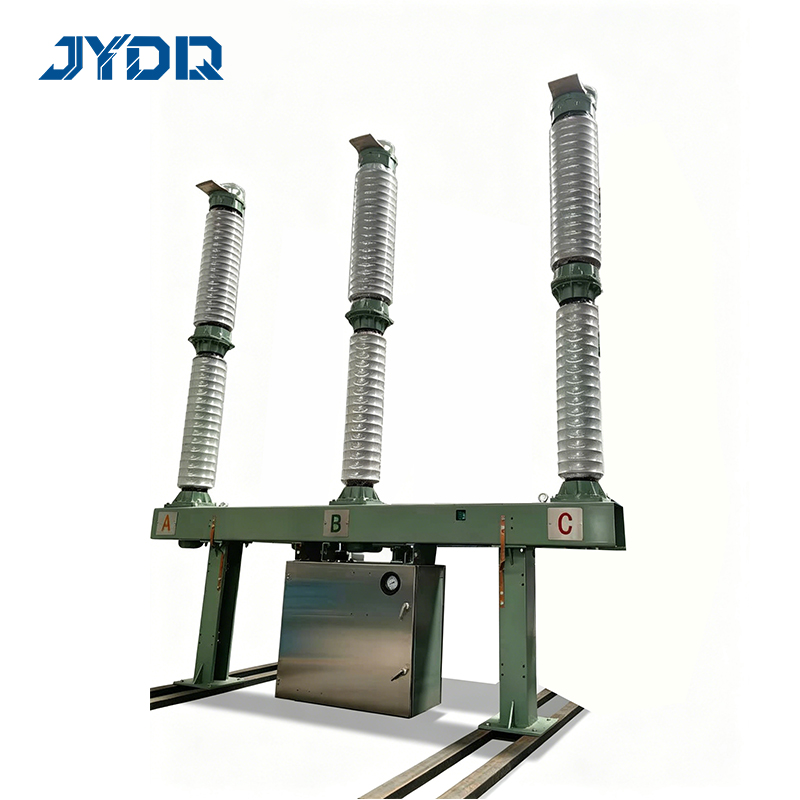
110/126/145KV Series Outdoor SF6 Circuit Breakers: Category Overview
Rated at 110 kV, 126 kV, or 145 kV maximum voltage, the equipment in this category belongs to the high-voltage outdoor switching segment—devices specifically designed for transmission-level grid protection and current interruption. Circuit breakers in the 110–145 kV range interrupt both rated load currents and short-circuit fault currents in power networks operating at these voltage levels, serving as the primary switching and protection interface between bulk transmission networks and downstream distribution or industrial supply systems.
The global switchgear market for this voltage class is shaped by a consistent technical reality: rated specifications do not equal deployment readiness. A circuit breaker rated for standard conditions may require additional qualification for alpine installations, high-humidity coastal environments, or seismic zones—conditions that are routine in infrastructure projects across Asia, Europe, Africa, and South America. The shift in evaluation happens when procurement teams move from datasheet comparison to site-specific compliance review, and that transition determines which specifications survive the tender process.
The LW Series in this category covers the 110 kV, 126 kV, and 145 kV voltage range within a unified outdoor SF6 design platform. Each configuration is validated to IEC 62271-100, independently certified by KEMA, and CE marked for international compliance documentation.
Key Product Characteristics
Key electrical parameters and design features of the 110/126/145KV Series include:
Rated voltage: 110 kV, 126 kV, and 145 kV (Um up to 145 kV)
Rated normal current: 3150 A
Rated short-circuit breaking current: 40 kA
Interrupting medium: SF6 gas insulation with self-developed operating mechanism built from premium materials
Environmental rating: Alpine-rated; qualified for installation in extreme cold climates
Certifications: IEC 62271-100 type-tested, KEMA certified, CE marked
Warranty: 10 years
Customization: Configurable to project-specific requirements on request
You will see some suppliers present IEC certification and third-party type testing as equivalent qualifications—and in broad terms, both confirm that a design has been validated against published standards. The distinction that matters in procurement is what the test report covers: which test clauses were witnessed, which basic insulation level (BIL) was demonstrated, and whether the certification basis matches the edition of the standard your grid authority requires. Both are meaningful—but they are not always identical in scope.
Common Applications
110/126/145KV Series outdoor circuit breakers are deployed across a range of transmission and high-voltage industrial infrastructure contexts. Understanding which application type applies directly affects the specification parameters that require priority attention:
High-voltage transmission substations: Primary protection and switching at grid connection points, typically requiring 40 kA short-circuit breaking capability and seismic qualification for the installation geography.
Grid interconnection and bulk power transfer stations: Boundary switching between interconnected grid segments, where protection coordination requirements and operational documentation must align with multiple grid operators.
Renewable energy project grid connections: Step-up or collector substation interfaces for wind, solar, or hydropower facilities connecting to national transmission grids—a growing segment where motor protection relay coordination and dissolved gas analysis transformer monitoring for adjacent oil-insulated equipment form part of the integrated substation design.
Industrial facilities with self-owned HV supply: High-voltage supply points for large manufacturing sites, smelters, or processing facilities requiring continuous, reliable HV switching with minimal maintenance intervention.
Seismically active or climatically demanding zones: Alpine installations, high-humidity tropical substations, and coastal infrastructure where standard ambient temperature assumptions do not apply—the LW Series alpine rating directly addresses cold-climate deployment contexts.
If your project involves a remote substation installation where maintenance access is infrequent and operating conditions fall outside standard temperature ranges, the alpine rating and 10-year warranty provide a relevant starting point for evaluating service life assumptions. That calculus is different from a utility substation in a temperate climate with regular maintenance cycles—and the specification review should reflect that difference.
How to Choose the Right 110–145 kV Circuit Breaker
When evaluating the 110/126/145KV Series for cross-border procurement, the decision is not just about specification sheets—it is about supplier reliability, compliance documentation, and how the equipment performs against the specific grid authority requirements of your project market. The following framework addresses the evaluation dimensions most relevant to HV circuit breaker selection at this voltage class.
Rated Voltage and BIL Confirmation
Match the circuit breaker rated maximum voltage (Um) to the grid nominal voltage and confirm the basic insulation level against the insulation coordination study. At 110–145 kV, standard BIL requirements typically fall in the 550–650 kV range, but local grid codes may specify values that diverge from the IEC 62271-100 table baseline. Confirm which edition of the standard your grid authority references before locking the specification.
Short-Circuit Breaking Current Margin
The 40 kA rating covers the majority of transmission-level installation requirements. Where protection coordination studies confirm a lower prospective fault current, a lower-rated breaker may be acceptable—but if the system fault level is at or near the boundary, confirm the margin with the protection engineer before specifying. In practice, many performance issues in HV systems do not originate with the equipment itself—they trace back to protection coordination decisions that were finalized after the breaker specification was already locked.
Certification Basis and Documentation Package
For projects requiring grid authority approval or pre-qualification submission, verify that the type test report covers the clauses applicable to your market. IEC 62271-100 and KEMA certification provide the documentation framework; the procurement checklist should also confirm availability of routine test reports for the specific unit, factory acceptance test procedures, and the format required by your grid authority for import and connection approval. An insulating mat and related substation safety accessories are typically procured separately but should be coordinated with HV circuit breaker installation documentation to avoid interface gaps at commissioning.
Environmental and Climate Qualification
When 110/126/145KV Series circuit breakers must serve projects in markets where local grid codes or climate conditions diverge from IEC standard assumptions, the question of which compliance basis takes precedence requires a project-by-project evaluation with the relevant grid authority—both can be valid, but they are not always identical in requirements. Alpine-rated qualification addresses cold-climate installations directly. For tropical, coastal, or high-humidity sites, confirm whether additional corrosion protection or environmental sealing is required beyond the standard configuration.
Supplier Qualification and First-Order Risk Assessment
Operational reliability is a non-negotiable baseline in utility and critical facility applications—HV circuit breaker failure at transmission voltage can affect large portions of a network and trigger significant operational consequences. For first-time procurement from a new international supplier, product literature and specification sheets alone are insufficient for risk assessment. The available KEMA type-test certification and CE marking provide an independent validation baseline. Buyers with formal first-order qualification requirements should request factory acceptance test procedures and, where feasible, witness testing arrangements prior to shipment. Customization to project-specific requirements is supported, with technical specification alignment completed before manufacturing release.
Why This Category Matters for International Procurement Teams
Formal tender and RFQ processes are the primary procurement mechanism for 110–145 kV equipment in utility and EPC contractor markets. Technical specifications at this voltage class routinely cover design standards, test clauses, documentation requirements, and installation interface data in detail. Suppliers who provide clear specification-to-specification alignment documentation—and who can demonstrate compliance across multiple market frameworks—reduce the qualification burden for procurement teams evaluating international supply options.
EPC contractors procuring equipment for projects across multiple markets face a specific challenge: a single product specification must serve installation environments with different regulatory frameworks, different grid authority documentation formats, and different import approval processes. The customizable design of the LW Series, combined with IEC 62271-100 type-test certification applicable across IEC-dominant markets in Europe, Asia, Africa, and South America, supports multi-market procurement alignment. The global switchgear market at this voltage class is seeing growing demand from renewable energy integration and grid modernization programs—contexts where dissolved gas analysis transformer monitoring and motor protection relay coordination are increasingly included in the integrated substation design scope.
With a 10-year warranty, KEMA-certified type testing, and alpine environmental qualification already validated, the 110/126/145KV Series provides a documented starting point for procurement teams navigating grid authority pre-qualification requirements, tender submissions, and first-order supplier risk management. Technical specification alignment and customization discussions are available prior to order placement to ensure project-specific requirements are addressed before manufacturing begins.

 EN