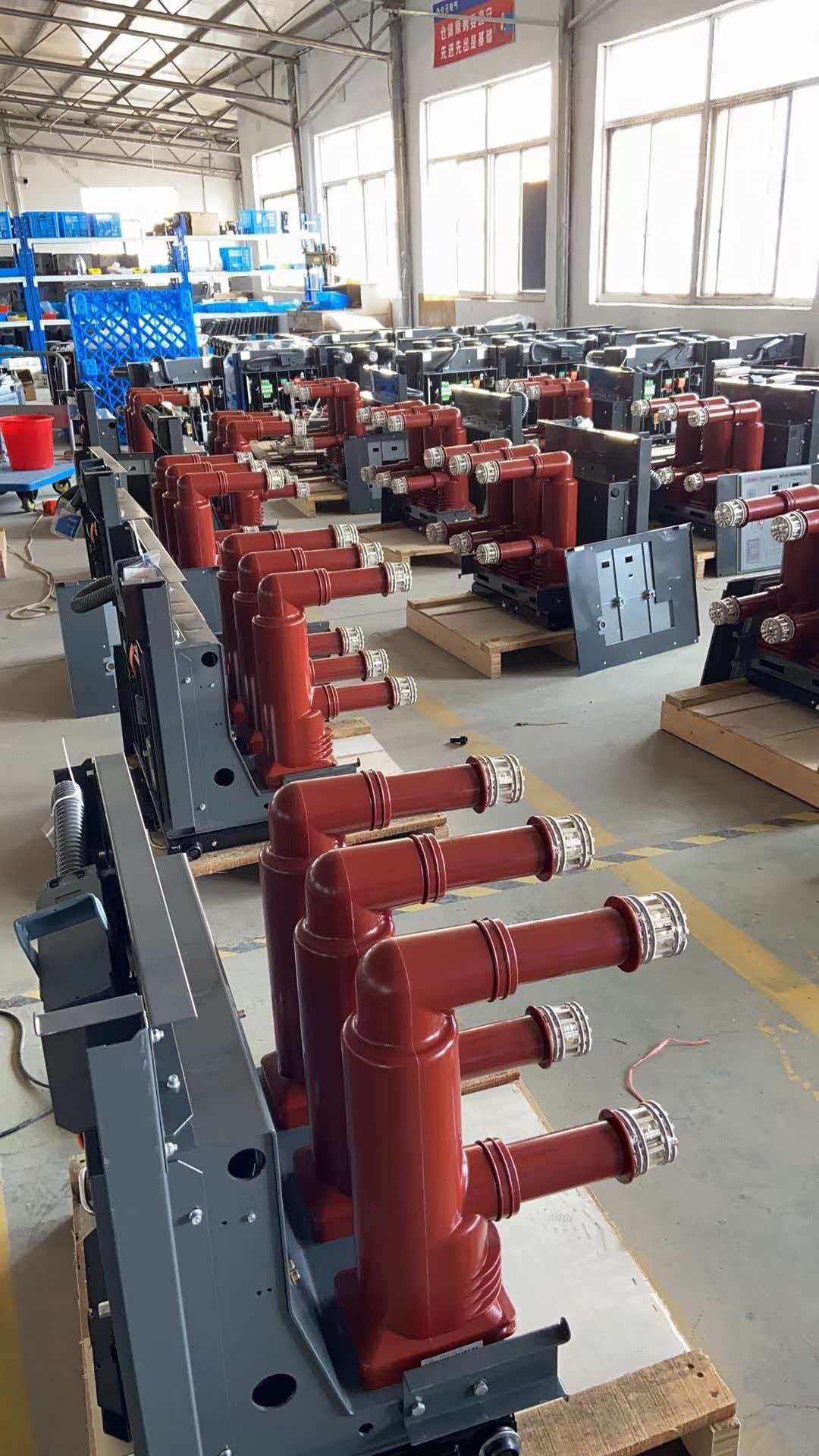
Selecting the right vacuum circuit breakers is one of the most critical decisions in designing and maintaining industrial distribution systems. These devices serve as the backbone of electrical protection, preventing catastrophic equipment damage and ensuring worker safety across manufacturing facilities, power plants, and distribution networks. Understanding how to evaluate and choose the right VCB for your specific application requires knowledge of technical specifications, system requirements, and operational demands.
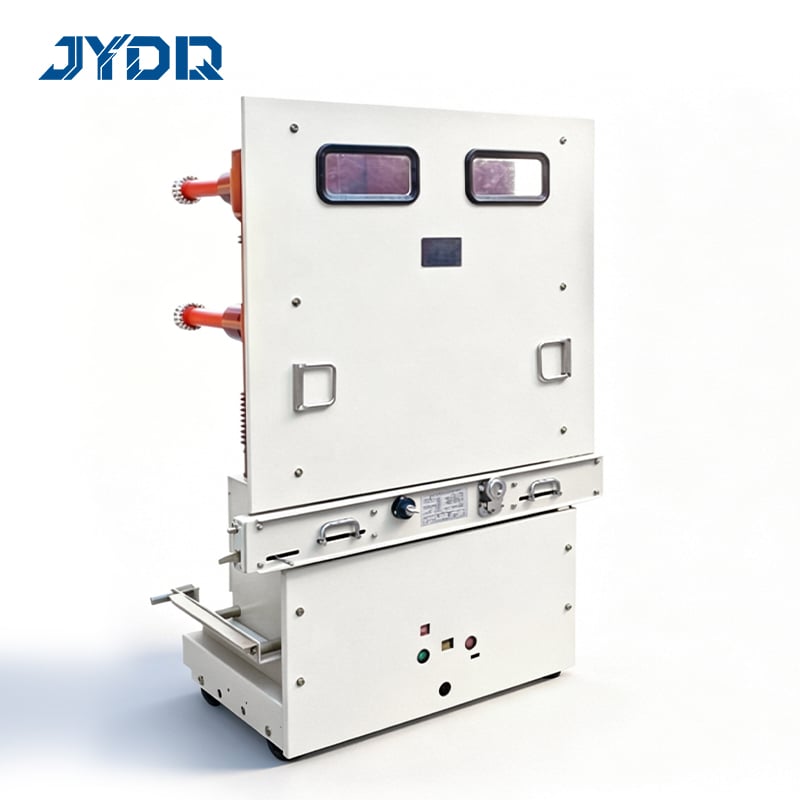
Industrial distribution systems operate under demanding conditions with fluctuating loads, environmental stresses, and reliability requirements that standard circuit protection cannot always meet. VCB technology has become the industry standard for medium-voltage applications because of its superior arc suppression, extended service life, and minimal maintenance needs. Making informed breaker selection decisions directly impacts your system's uptime, safety record, and total cost of ownership over the equipment's lifespan.
Understanding Your System Requirements and Load Profile
Before evaluating specific vacuum circuit breakers, you must thoroughly analyze your industrial distribution system's characteristics. Start by documenting the nominal voltage, maximum fault current, and anticipated peak loads across all circuits and substations. This data forms the foundation for all subsequent breaker selection decisions. Your electrical engineering team should review single-line diagrams, transformer specifications, and historical load patterns to establish accurate baseline requirements.
Voltage and Current Rating Analysis
Voltage ratings for industrial distribution typically range from 6 kV to 35 kV, though specific requirements depend on your facility's transmission infrastructure and step-down transformer configuration. For breaker selection, the VCB must match or exceed your system's nominal voltage class. Current ratings reflect both normal operating loads and anticipated growth, typically specified as continuous current capacity in amperes. Most industrial VCB units offer ratings between 630 amperes and 3150 amperes, with higher capacities available for major distribution nodes.
Fault current calculations determine your minimum interruption capacity requirement. Engineers must calculate the three-phase fault current at each VCB location using transformer impedance, cable resistance, and upstream system impedance. Industrial distribution systems commonly experience fault currents between 20 kA and 50 kA at main distribution points. Your vacuum circuit breakers must be rated to interrupt the maximum prospective fault current safely, or coordination with upstream protective devices becomes necessary.
Operating Duty and Environmental Factors
Industrial distribution breaker selection also requires evaluating environmental conditions and duty cycles specific to your facility. Indoor versus outdoor mounting, temperature extremes, humidity levels, and atmospheric pollution all influence VCB performance and maintenance intervals. Coastal facilities with salt spray conditions or industrial plants with chemically aggressive environments demand enhanced corrosion protection and more frequent servicing considerations.
Operating duty refers to how frequently your breaker switches loads and fault conditions. High-duty industrial applications with frequent switching demand VCB models designed for extended mechanical life, typically rated for 10,000 to 20,000 mechanical operations. Standard duty breakers suitable for occasional switching may only withstand 3,000 to 5,000 operations before requiring maintenance or replacement.
Evaluating Technical Specifications and Performance Characteristics
Once you understand your system requirements, detailed technical evaluation of available VCB options becomes essential. Industrial distribution breaker selection should compare multiple performance parameters beyond simple voltage and current ratings. Each specification directly impacts reliability, protection quality, and total cost of ownership across the breaker's operational life.
Interruption Capacity and Speed Performance
Interruption capacity represents the maximum fault current a vacuum circuit breaker can safely clear without damaging internal components or losing dielectric integrity. Premium industrial VCB designs offer interruption ratings up to 63 kA at rated voltage, providing substantial safety margins for high-fault-current systems. Standard industrial VCBs typically offer 31.5 kA or 40 kA ratings, suitable for most conventional power distribution networks.
Operating speed during fault conditions directly affects system stability and equipment protection effectiveness. Modern vacuum circuit breakers achieve first pole-to-clear times of 30 to 60 milliseconds, significantly faster than oil-filled alternatives. Fast fault clearing minimizes thermal and mechanical stress on downstream equipment, reducing cascade failure risk in industrial distribution systems. Breaker selection should prioritize models demonstrating consistent speed performance across the full operating temperature range.
Reliability and Maintenance Requirements
VCB technology offers exceptional reliability advantages over conventional breaker designs due to vacuum's superior arc-quenching properties. Industrial vacuum circuit breakers exhibit contact erosion rates of only 5 to 10 micrometers per operation, enabling service intervals exceeding 10 years in typical industrial distribution applications. This extended maintenance cycle reduces operational downtime and staffing requirements compared to gas-filled or oil-immersed alternatives.
When evaluating breaker selection criteria, examine manufacturer testing documentation confirming contact integrity after accelerated life testing. Reputable industrial VCB suppliers provide detailed endurance test reports showing contact resistance stability throughout the breaker's rated mechanical and electrical life. Documentation of environmental stress testing under humidity, temperature cycling, and corrosive atmospheres helps validate suitability for your specific facility conditions.
Coordination, Integration, and Long-Term System Planning
Successful breaker selection extends beyond individual device specifications to encompassing protective coordination, control system compatibility, and future system expansion requirements. Industrial distribution systems rarely operate in isolation; instead, they must coordinate with upstream generators, parallel feeders, and downstream motor loads. VCB selection decisions made today must accommodate anticipated growth, technology evolution, and integration with modern condition monitoring capabilities.
Protective Relay Compatibility and Coordination
Modern industrial VCB units integrate with sophisticated trip units offering instantaneous, definite-time, and inverse-time protection curves. During breaker selection, verify compatibility between your protective relay system and the VCB's trip unit specifications. Coordination curves must be calculated to ensure selective clearing of downstream faults while maintaining stable operation during transient overloads. This requires close collaboration between electrical engineering and system protection specialists.
Selectivity in industrial distribution demands that faults cleared by downstream protection devices do not unnecessarily trip upstream VCBs. Advanced breaker selection processes include detailed coordination studies simulating various fault scenarios. Computer-aided protection coordination software helps engineers optimize protection settings and device sequencing, ultimately reducing nuisance trips and extending equipment life across the entire industrial distribution network.
Digital Capabilities and Monitoring Integration
Contemporary industrial VCB designs increasingly incorporate digital monitoring, enabling predictive maintenance and real-time system diagnostics. Vacuum circuit breakers equipped with sensors tracking contact wear, operating coil temperature, and mechanical operation counts provide valuable data for condition-based maintenance scheduling. During breaker selection, consider whether digital-capable units justify their premium cost through reduced unplanned outages and optimized replacement timing in your industrial distribution environment.
Smart VCB integration with industrial control systems and SCADA platforms enhances operational visibility and enables automated demand-response capabilities. Modern industrial distribution systems benefit from breakers that communicate equipment status, fault history, and performance metrics to centralized monitoring stations. This technological capability supports predictive asset management and facilitates integration with renewable energy sources or microgrids in evolving industrial facilities.
FAQ
What voltage ratings are most common for industrial distribution vacuum circuit breakers?
Industrial VCB applications typically use voltage ratings of 6 kV, 10 kV, 12 kV, 24 kV, and 35 kV, depending on transformer configurations and distribution system design. Breaker selection must match your facility's specific voltage class to ensure proper protection coordination and equipment compatibility. Higher voltage classes like 35 kV are common in large industrial plants with significant power demand, while 6 kV to 12 kV systems serve most small to medium-sized manufacturing facilities.
How does VCB maintenance compare to other breaker technologies for industrial distribution?
Vacuum circuit breakers require significantly less maintenance than oil-filled or gas-insulated alternatives, with contact replacement intervals often exceeding 10 years in typical industrial distribution applications. Routine maintenance typically involves visual inspections, mechanical operation verification, and electrical parameter testing every 3 to 5 years. This reduced maintenance burden makes VCB an economical choice for industrial distribution systems operating in remote locations or facilities with limited maintenance staff resources.
Can vacuum circuit breakers be retrofitted into existing industrial distribution systems?
VCB retrofitting into older industrial distribution systems is often feasible but requires careful engineering evaluation. Mounting configurations, control wiring, and trip unit compatibility must be verified before breaker selection and installation. Modern VCBs may offer superior performance characteristics compared to legacy equipment, but mechanical and electrical interface compatibility must be confirmed with your system's original equipment manufacturer to ensure reliable operation and maintain protective coordination throughout the industrial distribution network.

 EN