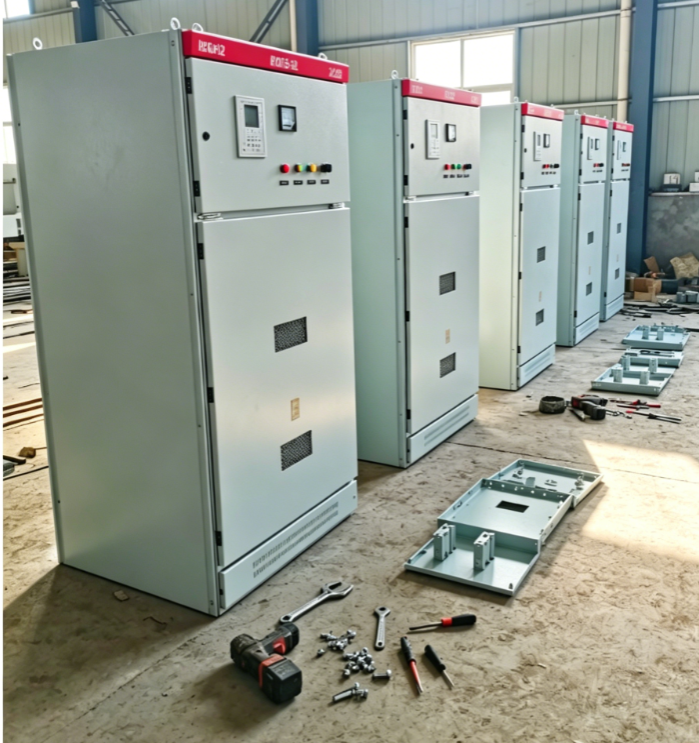
Choosing the correct breaker technology for your high voltage switchgear is critical to maintaining system reliability, safety, and operational efficiency. The decision involves understanding voltage ratings, fault current capacity, insulation media, duty cycles, and specific application requirements. Whether you are upgrading an existing substation or designing a new power distribution facility, selecting the right breaker directly impacts your long-term maintenance costs, downtime risk, and compliance with industry standards.
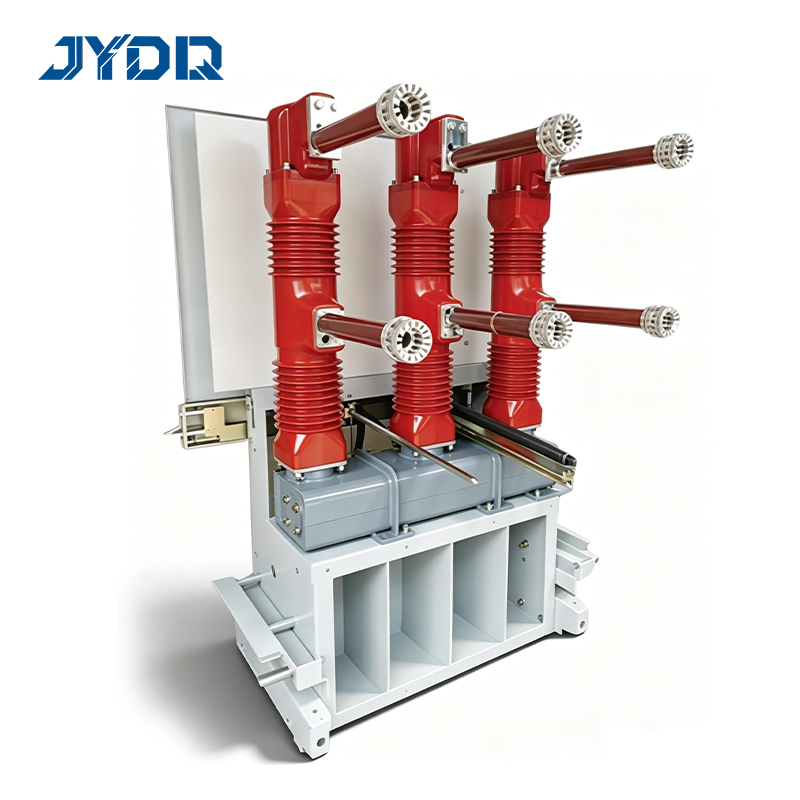
The selection process requires a systematic evaluation of multiple technical factors, including the system voltage class, expected fault levels, environmental conditions, and the preferred insulation medium such as SF6 gas. Modern high voltage switchgear deployments increasingly rely on VCB technology and SF6-insulated circuit breakers to achieve superior arc extinction performance and compact design. This guide walks through the key decision criteria that help you match breaker specifications to your operational needs and regulatory requirements.
Understanding Your Voltage and Fault Requirements
Voltage Class and System Parameters
The first step in selecting a circuit breaker for your high voltage switchgear is confirming the exact voltage class and rated voltage of your system. Standard voltage classes in high voltage environments include 110 kV, 220 kV, 330 kV, 400 kV, and higher ratings depending on transmission or distribution requirements. Your breaker must be rated equal to or above the system's nominal voltage to ensure proper insulation coordination and safe clearances.
Fault current capacity is equally critical. This refers to the maximum short-circuit current that the circuit breaker can safely interrupt without damage or dangerous arc extension. Calculate your system's prospective fault current using standard load flow studies and short-circuit analysis. A VCB or SF6 circuit breaker must have an interrupting rating that exceeds the highest calculated fault level at the installation point. Undersizing the interrupting capacity creates a catastrophic failure risk; oversizing increases cost unnecessarily but provides safety margin.
Duty Cycle and Operating Frequency
High voltage switchgear experiences different operating stresses depending on whether it serves a transmission line, distribution feeder, or industrial load center. Rapid reclosing duties, frequent switching operations, and continuous thermal exposure all affect breaker degradation and maintenance intervals. If your application requires frequent manual or automatic switching, a VCB offers superior switching performance and lower operating energy compared to traditional oil-filled designs. SF6 insulation in circuit breaker compartments enables reliable performance across wide temperature ranges without the maintenance burden of oil cooling systems.
Insulation Media and Technology Selection
SF6 Gas versus Vacuum Technology
SF6 circuit breakers have dominated high voltage switchgear for decades due to excellent arc extinction properties, compact design, and low maintenance. SF6 gas provides superior dielectric strength, allowing closer electrical spacing and smaller footprints within switchyard layouts. A circuit breaker using SF6 insulation can operate safely at higher pressure ratings and interrupting capacities than equivalent vacuum designs. Environmental concerns around SF6 emissions have spurred research into alternatives, yet SF6 remains the industry standard for 220 kV and above applications where VCB technology faces physical size constraints.
VCB technology—vacuum circuit breaker—offers a compelling alternative for lower voltage applications, typically up to 145 kV. A VCB eliminates gas emission concerns, requires virtually no maintenance, and delivers extremely fast arc extinction in vacuum environments. For many utilities and industrial facilities, the choice between VCB and SF6 depends on voltage class, available switchyard space, environmental regulations, and long-term operating cost analysis. Your circuit breaker selection must align with your facility's modernization goals and environmental compliance commitments.
Maintenance and Environmental Considerations
SF6 circuit breaker installations demand periodic gas purity checks, moisture monitoring, and potential gas replacement due to environmental regulations. However, SF6 gas circulates within sealed compartments and exhibits no degradation if properly maintained, unlike oil systems that degrade over time. VCB technology eliminates these requirements entirely; the vacuum envelope remains stable indefinitely without active maintenance. When selecting your circuit breaker, compare lifecycle maintenance costs, downtime risk, spare parts availability, and your facility's technical capacity to support gas handling procedures.
Application-Specific Selection Criteria
Industrial and Utility Network Differences
High voltage switchgear serves distinct roles in transmission networks, distribution systems, and industrial facilities, each with unique fault duty and switching requirements. Transmission-grade circuit breakers must interrupt sustained short circuits at the highest fault levels; a 400 kV SF6 breaker in a transmission substation typically operates at 40 to 63 kA interrupting capacity. Distribution feeders experience lower fault levels but higher switching frequency; these circuit breakers must endure thousands of load-break cycles over 30+ years. Industrial high voltage switchgear often operates in enclosed, temperature-controlled environments where SF6 performance advantages justify the added complexity and cost.
Before finalizing your circuit breaker specification, review the actual duty cycle profile at your installation site. Conduct or review recent short-circuit studies, verify historical switching data, and assess environmental extremes—temperature swings, humidity, altitude, and pollution levels. A VCB may prove ideal for a protected indoor facility with moderate fault duty, while an SF6 circuit breaker becomes mandatory for harsh outdoor environments or extreme fault levels. This analysis ensures your selected breaker delivers reliable, safe, long-term performance without oversizing or undersizing critical protection parameters.
Future Expansion and System Upgrades
High voltage switchgear often serves utility and industrial customers for 40+ years. When selecting a circuit breaker, consider potential system growth, voltage upgrades, or fault level increases that may occur during the equipment's operational life. Choosing a breaker with ratings somewhat above current requirements provides future-proofing against load growth and network reinforcement projects. Standardizing on one circuit breaker family—whether SF6 or VCB—across your switchgear fleet simplifies spare parts management, training, and emergency response procedures. Consult with your equipment manufacturer and system planner to align breaker selection with your organization's long-term infrastructure roadmap.
FAQ
What factors determine whether I need SF6 or VCB technology in my high voltage switchgear?
Voltage class is the primary driver: VCB technology is practical and cost-effective up to approximately 145 kV, while SF6 circuit breaker designs are mandatory for higher voltages due to superior arc extinction and compact design. Secondary factors include fault duty, switching frequency, environmental regulations, available space, and maintenance capacity. For 220 kV and above, SF6 insulation is the industry standard. Below 145 kV, VCB offers environmental and maintenance advantages if your site conditions permit.
How do I calculate the correct interrupting capacity for a circuit breaker in high voltage switchgear?
Perform a comprehensive short-circuit study using recognized standards such as IEC 60909 or ANSI/IEEE C37 methods. Input your system's source impedance, transformer impedances, cable characteristics, and network topology to calculate the maximum prospective fault current at each breaker location. Your circuit breaker's rated interrupting capacity must equal or exceed this calculated value. Always apply appropriate safety margins and account for potential future system reinforcements or fault level increases that may occur during the breaker's operational life.
What maintenance is required for SF6 and VCB circuit breakers in high voltage switchgear?
SF6 circuit breakers require periodic gas purity testing, moisture analysis, and pressure checks according to manufacturer schedules, typically annual or biennial intervals depending on duty cycle. VCB technology demands minimal maintenance; routine inspections and mechanical lubrication of operating mechanisms are usually sufficient. Neither technology requires regular oil changes or extensive component replacement if properly operated within design ratings. Consult your equipment documentation and local utility maintenance practices to establish appropriate preventive maintenance schedules for your specific installation.

 EN