Selecting the right capacity for a prefabricated box-type transformer is one of the most critical decisions in substation design and deployment. An undersized unit will struggle to meet peak electrical demands, causing voltage drops, equipment stress, and operational failures. An oversized transformer wastes capital investment, increases energy losses during light-load periods, and occupies unnecessary space. The key to reliable, efficient power distribution lies in matching transformer capacity precisely to your actual and projected load demand within the compact substation environment.
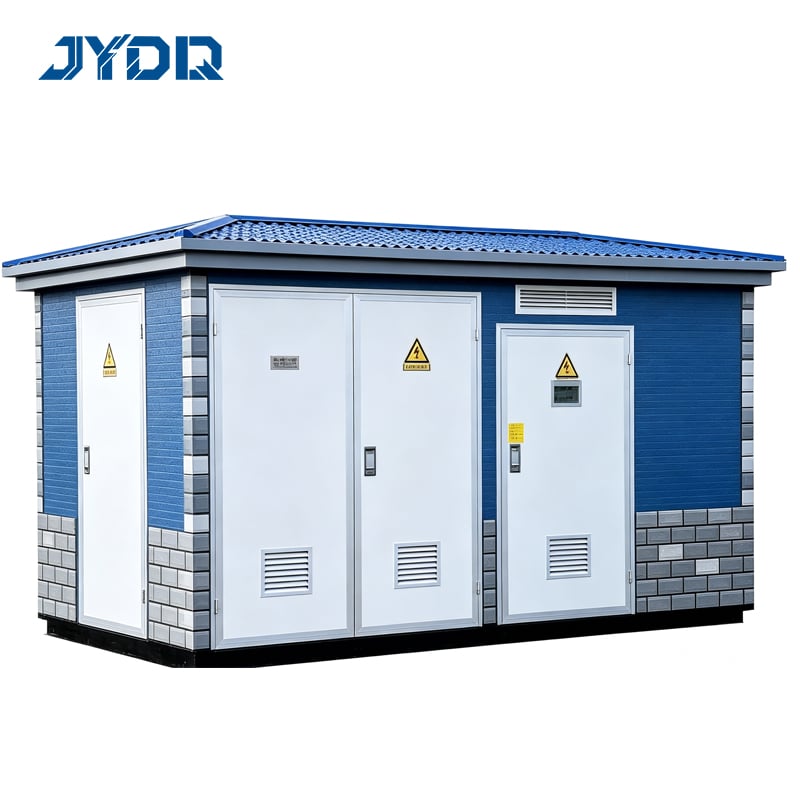
Capacity matching in a compact substation is fundamentally different from traditional substation design because space constraints, modular assembly, and standardized component ratings demand precision from the start. Unlike field-assembled installations where adjustments can sometimes be made later, prefabricated substations ship as integrated units. This makes proper transformer sizing during the planning phase essential. Understanding load profiles, diversity factors, and future growth projections ensures your compact substation delivers stable power for years without costly replacements or emergency upgrades.
Understanding Load Demand and Transformer Sizing
Calculating Current and Future Electrical Load
Load demand forms the foundation of any transformer sizing exercise. Start by conducting a detailed audit of all connected equipment, machinery, and facilities that will draw power from the compact substation. Document the nameplate ratings in kilowatts and kilovolt-amperes for motors, heaters, lighting systems, control panels, and any other loads. Historical consumption records, if available, reveal peak usage patterns and seasonal variations that affect how much transformer capacity you truly need.
Next, apply diversity factors to account for the reality that not all equipment operates simultaneously at full power. Industrial facilities rarely run every motor at rated capacity during the same moment. Diversity factors typically range from 0.5 to 0.8, meaning actual simultaneous load is often 50 to 80 percent of the sum of all individual nameplate ratings. For a compact substation serving a manufacturing plant, office building, or data center, calculating realistic simultaneous demand prevents over-sizing while maintaining adequate capacity. Include a growth factor, typically 15 to 25 percent, to accommodate future expansion without requiring a new prefabricated box-type transformer within five to ten years.
Selecting the Correct kVA Rating
Once you have calculated the demand load, select a transformer kVA rating that sits comfortably above this value but does not exceed it by more than 20 to 25 percent. The prefabricated box-type transformer should operate in the 50 to 80 percent loading zone under normal conditions. This bandwidth optimizes efficiency, minimizes energy losses, and allows headroom for temporary load spikes without thermal stress. If your load demand calculations show 400 kVA, a 500 kVA unit is appropriate; jumping to 630 kVA wastes money and reduces operational efficiency during typical operation.
Standard transformer sizing in the context of compact substation design relies on kVA ratings in 25, 50, 100, 160, 250, 400, 630, 1000, and 1250 kVA increments. Choose the smallest rating that exceeds your calculated demand load. This ensures your compact substation matches real-world consumption patterns while preserving capital efficiency and avoiding unnecessary energy waste from running an oversized transformer at partial load.
Thermal and Operational Constraints
Heat Dissipation and Continuous Rating
A prefabricated box-type transformer generates heat proportional to its load and electrical losses. The transformer sizing process must account for the compact substation's thermal environment. Unlike outdoor field installations with natural air circulation, prefabricated substations enclose the transformer in a metal cabinet, creating localized heat buildup. Continuous ambient temperatures inside the cabinet can exceed outdoor air temperature by 10 to 20 degrees Celsius depending on ventilation design and external placement.
Check the transformer's thermal specifications and cooling design. Oil-immersed transformers in compact substations use either natural air cooling or forced-air cooling via fans. Dry-type units rely on direct air circulation. If ambient temperature or seasonal conditions push toward the upper end of the transformer's rated range, consider selecting a larger capacity unit to keep operating temperatures within safe margins. This protects insulation integrity, extends equipment life, and prevents thermal shutdown during demand peaks. The transformer sizing calculation must always integrate thermal operational limits, not just kVA demand.
Short-Circuit Withstand and System Strength
Transformer sizing also relates to system short-circuit capacity. A compact substation connected to a strong grid with high short-circuit current capability may require a transformer with robust short-circuit withstand ratings. Conversely, isolated or weakly connected systems allow smaller transformers with lower short-circuit impedance. An undersized transformer relative to system short-circuit capacity can face mechanical and thermal stresses during faults that may otherwise be manageable in a properly sized unit. Engineering standards and utility requirements specify minimum transformer withstand capabilities based on system fault levels.
When matching transformer capacity inside a prefabricated substation, verify that the chosen transformer impedance and short-circuit rating align with the distribution network's fault current characteristics. This coordination prevents cascading failures and ensures the compact substation responds safely to grid disturbances. Improper transformer sizing in relation to system strength is a common source of field failures that early-stage load demand analysis alone cannot catch.
Practical Sizing Workflow for Prefabricated Substations
Step-by-Step Capacity Selection Process
Begin by gathering electrical load data for the facility or zone the compact substation will serve. List every significant load, its rated power, and its typical duty cycle. Sum the total and apply a realistic diversity factor, typically 0.6 to 0.7 for mixed industrial or commercial loads. Multiply by a growth allowance of 1.15 to 1.25 to account for future expansion. This calculation yields a target kVA value. Round up to the nearest standard transformer capacity available in prefabricated box-type transformer offerings. For example, if your calculation yields 385 kVA, select a 400 kVA unit; if it yields 420 kVA, move to 500 kVA.
Next, verify that the selected transformer fits within the compact substation enclosure and that cooling provisions are adequate for local ambient conditions. Check regulatory approvals, utility interconnection requirements, and any industry-specific load standards applicable to your facility type. Finally, confirm that protection devices—circuit breakers, disconnect switches, and metering equipment—are rated to handle the transformer's secondary current at the chosen kVA level. A comprehensive transformer sizing review ensures the compact substation will perform reliably from commissioning through several years of operation.
Load Demand Forecasting and Margin Planning
Industrial and commercial facilities often undergo equipment upgrades, production increases, or facility expansions that increase electrical load demand. Conservative transformer sizing incorporates these growth expectations from the outset. A 20 percent capacity margin built into the initial prefabricated box-type transformer selection can accommodate five to ten years of gradual load growth before replacement becomes necessary. This approach spreads the investment over time and avoids emergency transformer upgrades that disrupt operations and inflate costs.
Document the assumptions behind your load demand forecast and share them with facility operations and maintenance teams. As actual usage patterns emerge, compare them against the original projections. If loads prove consistently lower than expected, the compact substation operates with comfortable headroom. If loads approach or exceed the forecasted peak, plan a capacity upgrade proactively rather than waiting for equipment stress or failures to force the decision. Ongoing load monitoring transforms the initial transformer sizing decision into a living part of facility energy management.
FAQ
What happens if a prefabricated box-type transformer is undersized?
An undersized transformer will experience continuous overloading, leading to excessive heat generation, reduced lifespan, nuisance tripping of protection devices, and poor voltage regulation. Load demand will exceed the transformer's capacity, causing voltage sags that damage sensitive equipment and disrupt operations. In severe cases, thermal protection devices will shut down the unit, forcing emergency repairs or replacement during critical production periods.
How does diversity factor affect transformer sizing in a compact substation?
Diversity factor reflects the reality that connected electrical loads rarely operate at full nameplate capacity simultaneously. A compact substation serving a manufacturing plant with multiple motors, HVAC systems, and lighting will not run everything at peak power at the same moment. Applying a realistic diversity factor of 0.6 to 0.75 reduces the calculated load demand, allowing selection of a smaller transformer that is still adequate for actual simultaneous usage. This approach optimizes capital spending while maintaining operational reliability based on true load demand patterns.
Can a prefabricated box-type transformer be upgraded if load demand exceeds capacity?
Prefabricated substations are assembled as integrated units, making transformer replacement complex and disruptive. While upgrades are technically possible, they involve de-energizing the substation, removing the old transformer, installing a new unit, and completing factory re-testing and field commissioning. This process consumes weeks or months and may require temporary power solutions to avoid downtime. Proper transformer sizing during the initial design phase eliminates the need for costly emergency replacements and prevents operational disruptions that proper load demand analysis and capacity planning can prevent.

 EN