The decision to deploy a prefabricated box-type transformer versus pursuing traditional on-site construction represents a critical inflection point in infrastructure project planning. This choice determines not only capital expenditure and timeline feasibility but also the quality, safety, and operational reliability of the electrical distribution system. Industrial operators, utilities, and project managers increasingly recognize that modular substation solutions offer measurable advantages under specific project conditions, particularly when accelerated project schedules, constrained site conditions, or quality assurance becomes paramount.
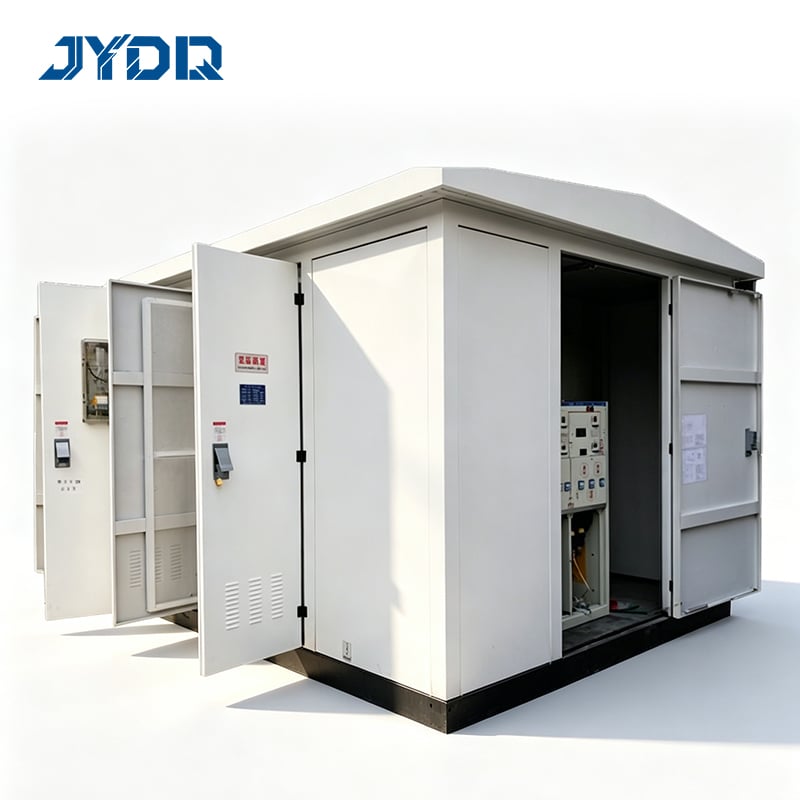
Understanding when to choose a modular substation solution requires insight into how prefabricated systems fundamentally differ from conventional construction methods. The manufacturing environment, transportation logistics, installation protocols, and performance guarantees create distinct operational profiles that align with different project priorities. This guide clarifies the defining scenarios where prefabricated solutions deliver superior outcomes and how to evaluate whether your project qualifies for these advantages.
Timeline Acceleration and Project Schedule Performance
Manufacturing Parallel Processing
The project schedule advantage of modular substations stems directly from parallel manufacturing and site preparation workflows. While conventional construction demands sequential phases—site clearing, foundation design and permit approvals, material procurement, and then assembly—a prefabricated box-type transformer can be manufactured in a factory setting simultaneously with site work. This parallelization compresses the critical path by 40 to 60 percent depending on project complexity and local permitting cycles. Factory assembly occurs under controlled conditions with standardized quality checks, eliminating weather delays and site-specific uncertainties that frequently derail traditional timelines.
Reduced On-Site Installation Duration
Conventional substations require weeks or months of on-site assembly, wiring, testing, and commissioning. A modular substation arrives substantially complete, requiring only foundational placement, utility connections, and final verification testing. Site work duration typically reduces to days rather than weeks. This acceleration directly improves project schedule performance, particularly for time-sensitive industrial operations, data centers, manufacturing expansions, or utilities with tight seasonal installation windows. Compressed site work also minimizes community disruption, reduces labor coordination complexity, and lowers the risk of cost overruns tied to extended field operations.
Quality Assurance and Manufacturing Control
Factory-Standardized Production
Prefabricated box-type transformer systems are manufactured in specialized facilities with rigorous quality protocols, environmental controls, and redundant testing infrastructure. Every component enters controlled assembly sequences where contamination exposure, assembly stress, and workmanship variability are systematically minimized. Each modular substation undergoes factory acceptance testing including insulation resistance checks, oil analysis, voltage withstand tests, and thermal imaging before shipment. This standardized manufacturing environment eliminates the site-specific quality risks inherent to on-site construction, where weather exposure, inconsistent labor, and variable material storage conditions degrade component performance and longevity.
Reduced Field Workmanship Risk
On-site construction introduces variability tied to installer expertise, weather conditions, material handling during transport and assembly, and schedule pressure that can compromise assembly quality. Prefabricated solutions transfer the complexity and risk to the manufacturing environment where process controls, specialized tooling, and factory inspection protocols ensure consistency. This shift dramatically reduces the probability of assembly defects, improper terminal connections, inadequate sealing, or contamination that can degrade substation performance and lifespan. Organizations prioritizing reliability and warranty protection gain substantial advantage through modular substation deployment.
Site Constraints and Accessibility Optimization
Difficult Terrain and Urban Deployment
Project sites with severe space limitations, difficult access, poor soil conditions, or dense urban environments frequently cannot accommodate the extended timelines and logistical complexity of conventional construction. A modular substation arrives as an integrated unit requiring minimal site preparation and significantly reduced heavy equipment presence. Urban retrofit projects, mountain locations, environmentally sensitive areas, and sites with constrained ingress routes all benefit from the reduced site work footprint and simplified transport requirements of prefabricated systems. This advantage becomes decisive when site work logistics would otherwise dominate project cost and scheduling risk.
Minimal Foundation and Preparation Requirements
Conventional substation construction demands extensive civil work including excavation, concrete pad preparation, drainage installation, and equipment staging areas. Modular substations operate within a compact footprint, typically requiring only a prepared level surface or simple reinforced pad. This reduction in site work complexity directly lowers civil infrastructure costs, accelerates site readiness, and minimizes environmental disruption. Projects already constrained by budget or site access gain material advantage through the simplified preparation demands of prefabricated box-type transformer installations.
Operational Flexibility and Future Scalability
Relocatable Infrastructure for Temporary or Pilot Applications
Modular substations offer inherent flexibility for temporary power distribution, pilot industrial expansions, or infrastructure testing scenarios where conventional fixed construction would prove economically inefficient. The integrated design enables relocation if operational requirements evolve or project priorities shift. Organizations evaluating new manufacturing lines, temporary mining operations, or phased industrial deployments benefit significantly from modular substation mobility and the reduced commitment of permanent site-specific infrastructure. This flexibility transforms prefabricated solutions from a tactical choice into a strategic advantage for dynamic business environments.
Standardized Expansion and Performance Scaling
Prefabricated box-type transformer designs typically follow standardized configurations offering predictable performance scaling and future expansion pathways. Additional modular units can be deployed in parallel without redesigning supporting infrastructure, simplifying capacity expansion for growing operations. This standardization and scalability advantage resonates strongly with organizations anticipating incremental growth, multiple deployment locations, or evolving power requirements. The operational continuity and simplified planning associated with standardized modular substations contrasts sharply with the complexity and cost of retrofit modifications to conventional systems.
FAQ
When is conventional substation construction still preferable to prefabricated solutions?
Conventional on-site construction remains advantageous for highly customized applications requiring unique voltage configurations, specialized cooling systems, or complex integration with legacy infrastructure where standard modular designs cannot accommodate specific operational requirements. Additionally, projects with unconstrained timelines, abundant available site area, and locally available skilled labor may not justify the premium cost of factory manufacturing. Rural installations with minimal space constraints or applications where vendor lead times for prefabricated units exceed acceptable project schedules may also favor conventional construction approaches.
How does project schedule improvement quantify financially for modular substation deployments?
Project schedule acceleration translates to financial advantage through reduced labor overhead, minimized indirect costs, faster revenue generation from operational assets, and avoided penalty clauses in contracts with strict completion deadlines. Accelerating a modular substation installation by 8 to 12 weeks typically saves 15 to 25 percent in project-level indirect costs including site management, equipment staging, and coordination overhead. For production facilities or revenue-generating infrastructure, accelerated operational startup directly increases net present value by advancing cash flow by months. The financial benefit becomes particularly substantial for time-sensitive industrial projects or utility installations operating within compressed seasonal windows.
What site work requirements remain essential even for prefabricated box-type transformer installations?
Modular substations still require foundational site preparation including drainage assessment, surface grading to ensure proper water runoff, electrical utility connection points, and safety clearance zones. Soil bearing capacity verification remains necessary to support the prefabricated unit weight, particularly in geologically unstable regions. Site access for delivery vehicles must be confirmed, and local utility coordination for incoming power and outgoing distribution connections remains essential. While site work scope decreases dramatically compared to conventional construction, proper foundational preparation remains critical to ensuring long-term operational reliability and compliance with equipment manufacturer specifications.

 EN