Selecting the appropriate voltage rating for a vacuum circuit breaker is one of the most critical decisions in electrical system design and maintenance. The voltage rating determines whether your breaker can safely handle the electrical stress of your distribution system without premature failure or dangerous faults. Choosing incorrectly can compromise equipment protection, reduce operational lifespan, and create serious safety hazards across your industrial or commercial installation.
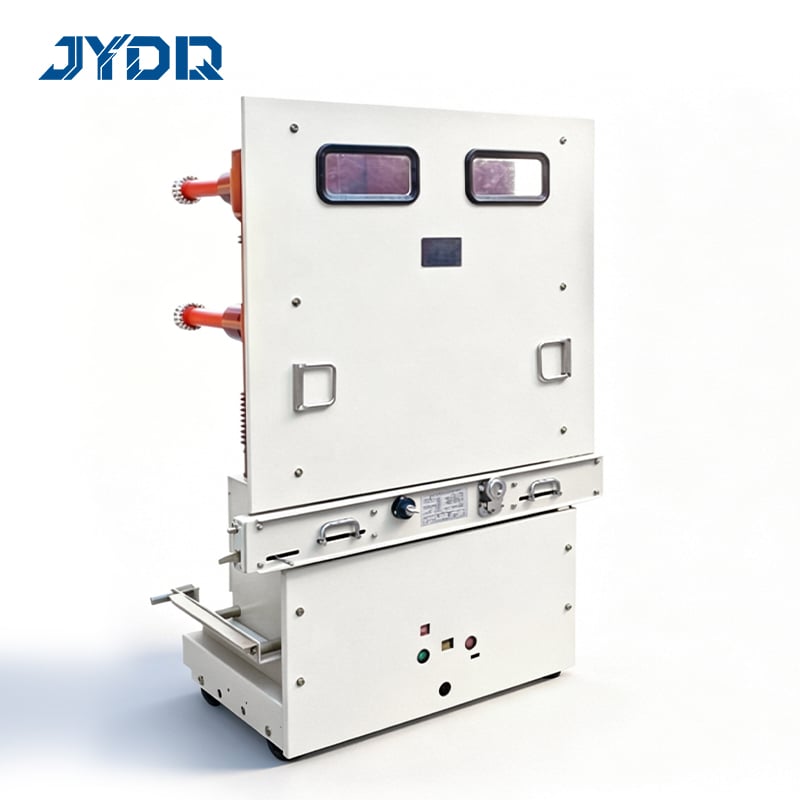
A vacuum circuit breaker operates by interrupting fault currents in an evacuated chamber, making it highly effective for medium-voltage applications. The voltage rating of your breaker must exceed or match your system voltage to ensure reliable arc suppression and electrical insulation integrity. Understanding the relationship between system voltage and proper breaker selection prevents costly downtime, ensures code compliance, and maximizes the operational life of your equipment investment.
Understanding System Voltage and Breaker Rating Compatibility
Defining Voltage Rating Standards
The voltage rating of a vacuum circuit breaker specifies the maximum voltage at which the breaker is designed to operate safely and effectively. Common voltage ratings for industrial applications include 6 kV, 10 kV, 15 kV, 24 kV, 27 kV, and 35 kV, depending on your power distribution architecture. Your system voltage represents the nominal electrical potential in your network, and the breaker's voltage rating must always equal or exceed this value to maintain proper isolation and arc extinction performance.
Matching Voltage Rating to System Voltage
Proper breaker selection requires that your vacuum circuit breaker voltage rating meets or exceeds the actual system voltage by at least 10 percent to account for transient voltage spikes and operational safety margins. If your distribution network operates at 10 kV, selecting a 10 kV-rated breaker is the minimum acceptable choice; however, many engineers recommend a 12 kV or higher-rated unit for additional protection headroom. Undersizing the voltage rating creates excessive electrical stress, accelerates vacuum tube degradation, and significantly increases the risk of arc reignition during fault clearing operations.
Key Factors in Voltage Rating Selection
Load Current and System Fault Levels
While voltage rating defines the electrical stress capacity, the breaker selection process must also account for the maximum fault current your system can produce. Different voltage ratings correspond to different current interrupting capabilities; a vacuum circuit breaker designed for higher voltages often handles lower current levels more efficiently. Understanding your system's three-phase short-circuit capacity and peak fault duration helps determine whether a particular voltage rating offers sufficient margin and ensures the breaker won't be overwhelmed during severe fault events.
Environmental and Operational Conditions
Installation environment, altitude, temperature extremes, and humidity levels influence how a vacuum circuit breaker performs under its rated voltage. Equipment installed at high altitude experiences reduced air density, which affects cooling and dielectric strength; therefore, you may need to select a higher voltage rating than nominal system voltage suggests. Similarly, installations in regions with extreme temperature swings or high humidity require breakers with enhanced insulation margin, which often means choosing a voltage rating one or two steps above your base system voltage to maintain long-term reliability.
Practical Breaker Selection Guidelines
Right-Sizing Your Vacuum Circuit Breaker
The fundamental rule for breaker selection is that your vacuum circuit breaker voltage rating must never be lower than system voltage. For most industrial applications, selecting a breaker rated at or 10 to 15 percent above your nominal system voltage strikes the best balance between cost efficiency and operational safety margin. If your facility operates a 12 kV distribution system, a 15 kV vacuum circuit breaker provides adequate insulation headroom without excessive cost, whereas a 35 kV breaker would be unnecessarily oversized and economically wasteful.
Documentation and Compliance Requirements
Your breaker selection process must be documented with reference to IEEE 37.04 and IEEE C37.06 standards, which define voltage rating classifications and testing protocols for medium-voltage switchgear. Many jurisdictions require compliance with these standards as part of building codes and electrical safety regulations. Maintaining clear records of your voltage rating decisions, system voltage measurements, and fault level calculations ensures that future maintenance teams and inspectors can verify that your vacuum circuit breaker installation meets all applicable safety and performance requirements.
FAQ
Can I use a vacuum circuit breaker rated at a lower voltage than my system voltage?
No, your vacuum circuit breaker voltage rating must equal or exceed system voltage. Using an undersized breaker risks catastrophic failure during fault conditions, vacuum tube puncture, and uncontrolled arcing. Always select a breaker rated at or above your nominal system voltage.
What happens if I choose a voltage rating that is too high for my system?
Oversizing the voltage rating increases capital cost and physical footprint but does not improve performance beyond a reasonable margin. Most engineers recommend staying within 10 to 15 percent above system voltage. Excessive overrating provides diminishing safety benefits while unnecessarily consuming space and budget resources.
How does altitude affect vacuum circuit breaker voltage rating selection?
High-altitude installations experience reduced air density, which weakens natural cooling and dielectric strength. Equipment installed above 1000 meters typically requires breakers with enhanced voltage ratings to compensate for environmental stress and maintain insulation integrity over the breaker's operational life.

 EN