Selecting the right vacuum circuit breaker for your substation is a critical decision that affects the reliability, safety, and efficiency of your electrical distribution network. A poorly matched breaker can lead to inadequate protection, unnecessary downtime, and increased maintenance costs. Understanding the selection process ensures that you choose equipment that meets your operational demands while complying with industry standards.
The selection process for a vacuum circuit breaker involves evaluating multiple technical and operational parameters that directly impact system performance. Medium voltage applications require careful attention to voltage ratings, breaking capacity, and duty cycle requirements. This guide walks you through the essential factors that influence breaker selection in substation environments, helping you make informed decisions based on actual system needs rather than generic specifications.
Understanding Voltage and Breaking Capacity Requirements
Voltage Rating Considerations
The voltage rating of your breaker must match or exceed the maximum operating voltage of your substation circuits. Medium voltage systems typically range from 1 kV to 52 kV, and selecting a breaker rated below this level creates serious safety risks. Your system's nominal voltage, plus transient overvoltages, determines the minimum voltage class required. For example, a 35 kV substation may require a breaker rated for 40.5 kV to accommodate standard overvoltage margins. Voltage mismatches are one of the leading causes of premature breaker failure in substations.
Breaking Capacity and Current Rating
Breaking capacity, measured in kiloamperes (kA), defines how much fault current your breaker can safely interrupt. This rating must exceed the maximum prospective fault current at your substation location. Calculate the three-phase short-circuit current using utility data and transformer impedance values. Your breaker selection must handle this worst-case scenario without mechanical damage or arc extinction failure. Additionally, the continuous current rating should align with the expected load current, typically rated at 80% of the breaker's nominal capacity to allow thermal margin.
Mechanical and Environmental Factors
Duty Cycle and Operating Frequency
Different substations impose different operational demands on breaker equipment. A distribution substation serving peak loads during summer months experiences higher duty cycles than a transmission switchyard with lower fault activity. Your breaker selection must accommodate the expected number of switching operations per year, both routine circuit resets and emergency fault clearances. Vacuum circuit breaker technology excels in high-duty environments because vacuum interrupters maintain their dielectric strength over thousands of operations. This makes them ideal for substation applications where reliability and extended service life are critical performance metrics.
Environmental and Installation Constraints
Substation location and climate conditions influence breaker performance and maintenance requirements. Outdoor installations at high altitudes require derating for reduced air density and cooling efficiency. Coastal environments with salt spray exposure demand corrosion-resistant materials and more frequent maintenance intervals. Indoor substation breakers may face temperature fluctuations and dust contamination. Your breaker selection must account for these environmental stressors to ensure the equipment functions reliably throughout its operational life. Medium voltage breakers designed for harsh environments include enhanced sealing, materials upgrades, and protective coatings that extend field performance.
Technical Specifications and Compliance Standards
IEC and Regional Standards Alignment
International standards such as IEC 62271-100 define performance requirements, testing protocols, and safety criteria for medium voltage circuit breakers. Your breaker selection must comply with applicable regional standards, whether IEC, ANSI, or local utility specifications. These standards specify mechanical endurance testing, dielectric strength verification, and thermal performance requirements that validate equipment reliability. Choosing a breaker certified to recognized standards reduces the risk of compatibility issues with protective relays, bus structures, and control systems already installed in your substation. Non-compliant equipment may fail inspection, delay project commissioning, or create insurance and warranty complications.
Protective Relay Coordination
A vacuum circuit breaker must coordinate seamlessly with the protective relay scheme protecting your substation circuits. The breaker's operating characteristics, including closing and opening times, must align with relay trip thresholds and clearing sequences. Modern digital relays communicate with trip units using standardized protocols, enabling faster fault response. Your breaker selection should consider whether you need traditional overcurrent elements or advanced features like directional earth fault protection. Mismatched relay-breaker coordination leads to nuisance trips, delayed fault clearing, or failure to isolate faults quickly, all of which compromise substation security and load stability.
Maintenance and Spare Parts Availability
Long-term breaker operation depends on the availability of maintenance support and replacement components. Selecting a breaker with established service channels in your region reduces downtime when maintenance is required. Vacuum interrupters are the primary wear component in vacuum circuit breaker designs, and timely replacement keeps equipment within manufacturer specifications. Your breaker selection should prioritize models with documented spare parts availability and trained technician networks near your substation location. This ensures that unexpected maintenance needs do not force extended equipment outages or costly emergency repairs.
FAQ
What is the primary advantage of a vacuum circuit breaker for substation applications?
Vacuum circuit breaker technology offers superior dielectric recovery speed and mechanical durability compared to oil-filled alternatives. In a substation environment, this translates to faster fault clearing, reduced arc erosion, and extended equipment life with minimal maintenance. Vacuum interrupters maintain their insulating properties over tens of thousands of operations, making them ideal for high-duty switching applications where reliability cannot be compromised. This reliability advantage directly reduces unplanned outages and operational costs over the breaker's service life.
How do I calculate the required breaking capacity for a substation breaker selection?
Breaking capacity is determined by calculating the maximum prospective three-phase short-circuit current at your substation location. Obtain the utility supply impedance, transformer impedance, and bus impedance from your substation design documents. Use these values to compute the total fault current using standard short-circuit analysis methods or software tools. Your breaker's rated breaking capacity must exceed this calculated maximum by at least 10% to ensure safe operation with margin for future load growth. If your substation feeds multiple circuits, model each fault location separately and select the breaker for the highest prospective fault scenario.
Are outdoor and indoor vacuum circuit breakers interchangeable in a substation?
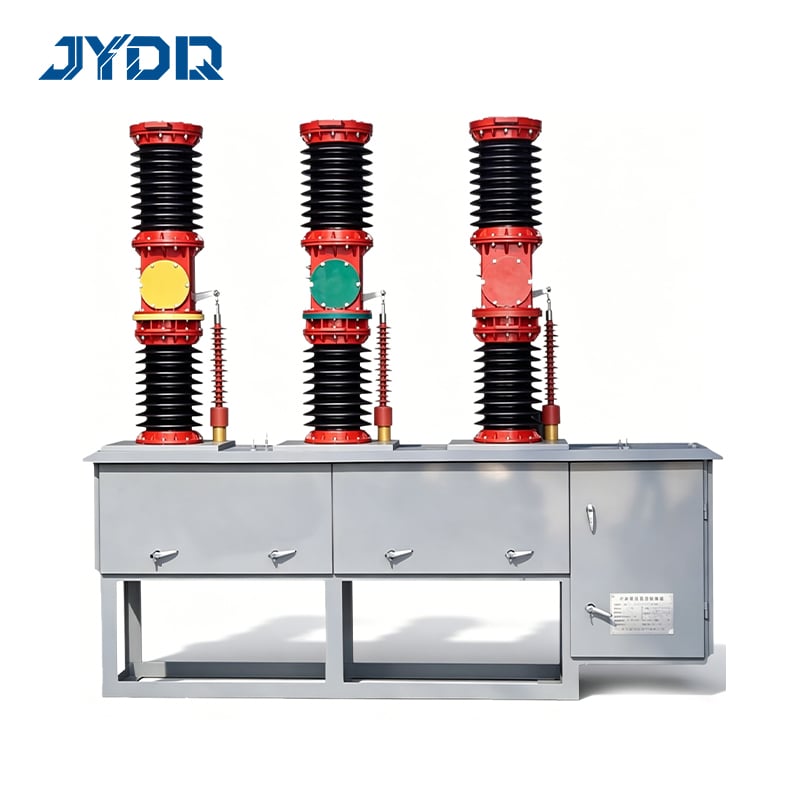
Outdoor and indoor vacuum circuit breaker designs differ significantly in environmental protection, cooling, and mechanical packaging, making them generally not interchangeable. Outdoor breakers feature enhanced weatherproofing, UV-resistant materials, and superior drainage to handle rain and temperature extremes. Indoor substation breakers assume controlled temperature ranges and protection from direct environmental exposure. Attempting to install an indoor breaker outdoors or vice versa voids warranties, compromises performance, and creates safety risks. Your breaker selection must specifically match whether installation occurs in an outdoor or indoor substation environment to ensure compliance with design specifications and operational reliability.

 EN