Choosing the right gas insulated switchgear for a limited space substation requires careful evaluation of technical specifications, operational needs, and site constraints. Gas insulated switchgear, commonly known as GIS, represents a transformative technology for modern substations where land availability is restricted. Unlike conventional air-insulated switchgear that demands sprawling footprints, GIS solutions compress complex switching and protection equipment into compact metal-enclosed modules. This fundamental difference makes GIS the preferred choice for urban environments, industrial facilities, and congested utility networks where real estate costs and availability directly impact project viability and timeline.
The selection process for GIS in a limited space substation extends beyond simple size comparison. Your decision must integrate voltage requirements, fault-level ratings, maintenance accessibility, thermal performance, environmental conditions, and long-term operational costs. A comprehensive assessment ensures that the chosen gas insulated switchgear solution not only fits physically within your site boundaries but also delivers reliable performance, meets regulatory standards, and supports your utility's expansion plans. Understanding the key selection criteria upfront prevents costly retrofits, operational inefficiencies, and safety compromises.
Assessing Substation Space Constraints and GIS Benefits
Understanding Your Limited Space Substation Requirements
Before selecting gas insulated switchgear, measure and document your available substation footprint accurately. Calculate the total space needed for switchgear equipment, transformers, control buildings, cable routes, and maintenance clearances. Limited space substations typically occupy less than one hectare, and many occupy far smaller urban plots. GIS technology reduces the equipment envelope by 70 to 80 percent compared to conventional air-insulated alternatives, making it the logical technology for constrained sites. Your substation design team should prepare a site layout drawing showing exact dimensions, access points, and any underground utilities or overhead restrictions that could affect equipment placement and future maintenance activities.
Operational Advantages of Gas Insulated Switchgear
Gas insulated switchgear offers multiple operational benefits beyond spatial efficiency. The sealed design protects internal components from environmental contamination, moisture, and salt spray—critical advantages in coastal, industrial, or high-pollution regions. GIS requires significantly less maintenance compared to air-insulated equipment, reducing operational costs and unplanned downtime. The compact design also reduces electromagnetic field emissions and improves visual impact in sensitive urban areas. When evaluating GIS for your limited space substation, consider these operational gains alongside the space savings. Gas insulated switchgear systems provide superior reliability and predictable maintenance intervals, which translates to lower total cost of ownership over 30 to 40-year equipment lifecycles.
Technical Selection Criteria for Gas Insulated Switchgear
Voltage Class and Fault Level Ratings
Your substation must operate at a specific voltage—typically 66 kV, 110 kV, 220 kV, or 330 kV for transmission systems. Select gas insulated switchgear rated for your exact voltage class with appropriate safety margins. Equally important is the fault level rating, measured in kiloamperes (kA), which defines the maximum current the equipment can safely interrupt during a short-circuit event. A limited space substation often feeds multiple feeders or connects to high-impedance sources, which influences fault levels. Gas insulated switchgear specifications must match or exceed your system's calculated fault level. Undersizing the GIS equipment creates serious safety risks and equipment damage, while significant oversizing inflates capital costs unnecessarily. Collaborate with your transmission or distribution planner to confirm both voltage and fault level requirements before finalizing the gas insulated switchgear specification.
Modular Configuration and Expandability
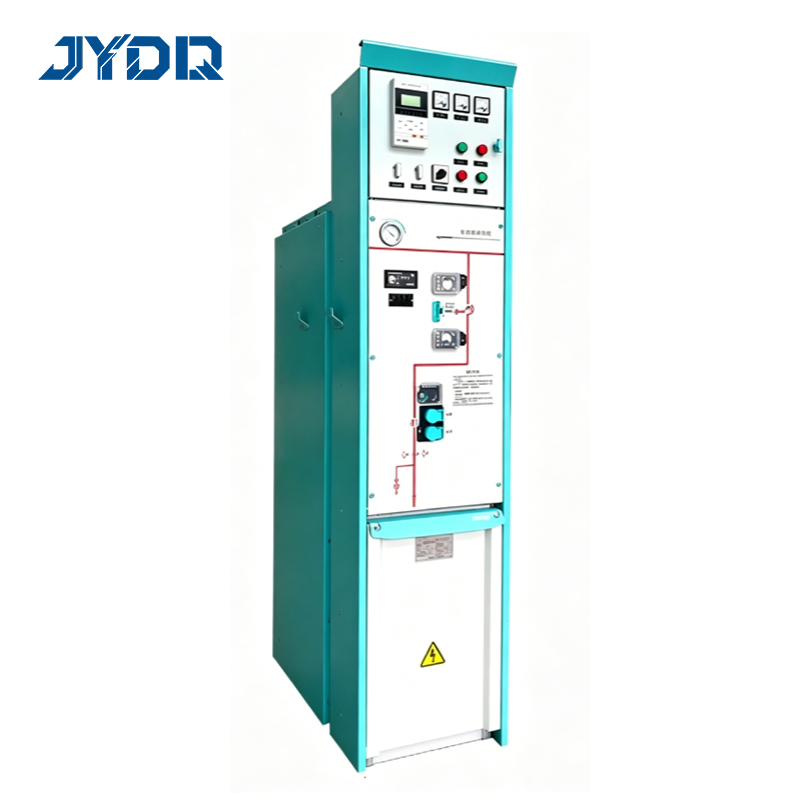
Modern gas insulated switchgear systems use modular design principles, allowing you to assemble various configurations from standard building-block units. A limited space substation may start with a simple bus-section arrangement and require future expansion to accommodate additional feeders or transformer connections. Selecting GIS from manufacturers offering flexible modular platforms ensures your substation can evolve without complete equipment replacement. Gas insulated switchgear modules typically include circuit breakers, disconnecting switches, earthing switches, current transformers, and voltage transformers integrated into single compact units. This modularity simplifies installation sequences and reduces on-site assembly complexity. When specifying gas insulated switchgear, request technical documentation showing potential future configurations to verify that your initial design accommodates planned network expansion within your physical constraints.
Environmental and Maintenance Considerations for Gas Insulated Switchgear
Gas Management and Environmental Compliance
Gas insulated switchgear uses sulfur hexafluoride (SF6) as the insulation and arc-quenching medium, a potent greenhouse gas. Modern GIS equipment incorporates gas handling best practices and leakage prevention systems to minimize environmental impact. Your facility must establish documented gas management protocols including regular inspection for leaks, proper containment during maintenance, and recovery procedures using certified equipment. Gas insulated switchgear manufacturers now offer SF6-alternative insulation gases with significantly lower global warming potential, presenting an environmentally responsible alternative for new installations. Some regions regulate or restrict SF6 usage, so verify local environmental regulations before finalizing your GIS selection. Choose gas insulated switchgear suppliers who support sustainable gas management and can provide lifecycle support for gas recycling and responsible disposal.
Maintenance Access and Service Planning
Despite its sealed design, gas insulated switchgear requires periodic maintenance—typically annual inspections, gas quality analysis, and component testing. Limited space substations demand strategic planning for maintenance vehicle access and safe working areas around the GIS equipment. Gas insulated switchgear should be positioned to allow maintenance technicians adequate clearance for panel removal and internal inspections. Specify GIS systems with quick-disconnect interfaces that minimize downtime during routine service work. Request detailed maintenance manuals and spare-parts availability from the manufacturer before purchase to ensure long-term support. Gas insulated switchgear from established suppliers typically offers better spare-parts availability and faster emergency service response compared to lesser-known manufacturers. Building strong relationships with your GIS supplier's technical support team pays dividends throughout the substation's operating life.
FAQ
What voltage ratings are available for gas insulated switchgear in limited space substations?
Gas insulated switchgear is manufactured for all standard utility voltages, including 66 kV, 110 kV, 220 kV, 330 kV, 400 kV, and higher ratings. Most limited space substations operate at 110 kV to 330 kV, and GIS is commercially available for all these classes. Select the voltage class that matches your network design requirements precisely. Consult with your utility's planning department or transmission operator to confirm the correct voltage specification for your substation project.
How much space does gas insulated switchgear actually save compared to air-insulated switchgear?
Gas insulated switchgear typically reduces the equipment footprint by 70 to 80 percent relative to conventional air-insulated switchgear. A limited space substation that might require 2 to 3 hectares with traditional air-insulated equipment can often be accommodated in 0.5 hectares or less using GIS technology. The exact space savings depend on voltage class, circuit configuration, and equipment density, but the reduction consistently proves substantial enough to enable substation projects that would be economically unfeasible with air-insulated technology.
Is SF6 gas in gas insulated switchgear a serious environmental concern?
SF6 is a greenhouse gas with high global warming potential, but modern gas insulated switchgear incorporates robust leak detection and prevention systems. Regular maintenance, proper gas handling procedures, and use of newer low-GWP alternative gases significantly reduce environmental impact. Many utilities and regulatory bodies now mandate environmental best practices for GIS gas management, and reputable manufacturers actively support compliance with these standards. Choosing modern GIS equipment with advanced gas monitoring technology and considering alternative-gas options demonstrates environmental stewardship while maintaining reliable substation operation.

 EN