When selecting electrical equipment for industrial or commercial installations, understanding short circuit current capacity is critical to system safety and operational reliability. The vacuum circuit breaker stands as one of the most important protective devices in modern power distribution networks, yet many specification decisions overlook the profound impact of short circuit current on device selection and performance.
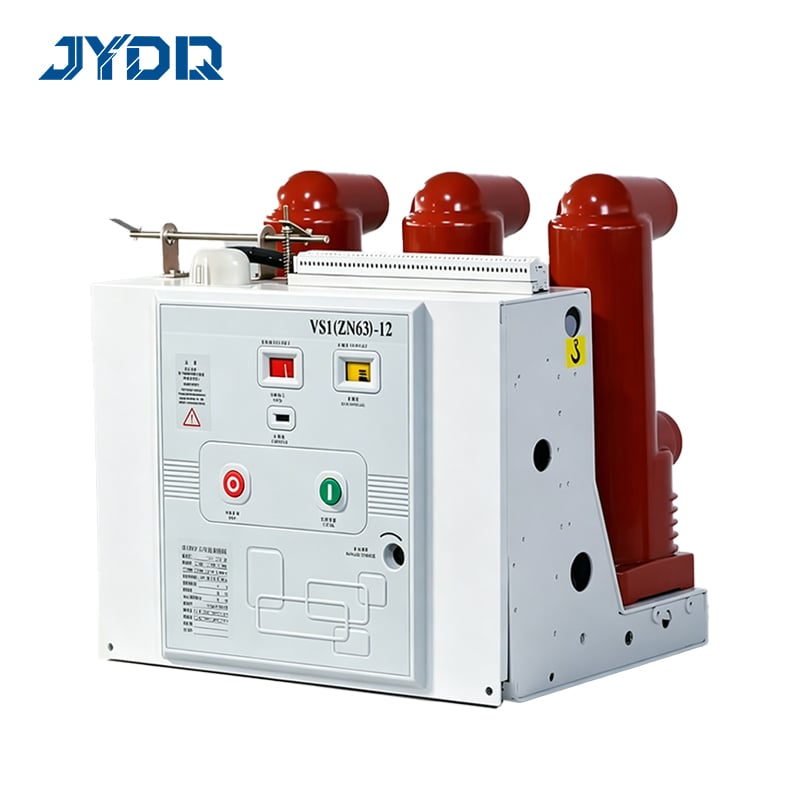
Short circuit events represent sudden, uncontrolled electrical faults that release enormous energy in milliseconds. A vacuum circuit breaker must handle this extreme stress through proper interruption design and adequately rated fault current capacity. Selecting a breaker without fully evaluating short circuit conditions in your installation puts equipment at risk, threatens personnel safety, and can lead to catastrophic equipment failure, fire hazards, or extended downtime.
Understanding Short Circuit Current and Breaker Rating Requirements
Fault Current Characteristics in Power Distribution
Fault current arises when electrical conductors contact each other or when insulation fails, creating a low-resistance path that allows system voltage to drive extremely high amperage through the circuit. The magnitude of fault current depends on source impedance, system voltage, transformer capacity, and distance from the fault point. In medium-voltage and high-voltage installations, fault current can reach tens of thousands of amperes within a single cycle, generating extreme mechanical forces and thermal energy that physically stresses all equipment in the circuit path.
The breaker rating must exceed the maximum potential fault current at its installation location. When a short circuit occurs, the vacuum circuit breaker's contacts must separate and extinguish the arc under conditions of peak current stress. If the breaker rating falls below the actual available fault current, the device may fail to interrupt safely, potentially causing contacts to weld, arcing to persist, or the breaker enclosure to rupture.
Why Breaker Rating Mismatches Create Dangerous Conditions
A common specification error occurs when engineers select a vacuum circuit breaker based solely on normal operating current rather than available fault current. In medium-voltage systems, normal load currents might be 500 to 1000 amperes, but fault current could easily reach 20,000 to 50,000 amperes or higher depending on network configuration. Undersized breaker ratings in such scenarios lead to failed interruption, extended fault duration, equipment damage, and potential injuries to maintenance personnel.
Proper short circuit analysis forms the foundation of safe equipment selection. System engineers must calculate maximum available fault current using established methods such as transformer impedance analysis, source impedance determination, and utility coordination data. Once fault current is established, the vacuum circuit breaker must be rated equal to or greater than that value to ensure reliable fault interruption and safe system operation.
Coordination Between Fault Current, Contact Design, and Arc Interruption
Vacuum Interrupter Technology and High Current Performance
The vacuum interrupter chamber forms the core of a modern vacuum circuit breaker's ability to handle short circuit conditions. Inside a hermetically sealed chamber, moving contacts separate under fault current, creating an arc that ionizes metal vapor from contact surfaces. The vacuum environment—with pressure around 0.01 pascals—enables rapid arc extinction because ions and electrons quickly recombine in the absence of atmospheric gases, and metal vapor condenses on chamber walls rather than sustaining the arc.
When short circuit current flows through the interrupter, contact material erodes and vaporizes, but the vacuum environment ensures complete arc quenching within a single half-cycle of AC current or within milliseconds of DC fault clearing. This fast interruption minimizes thermal stress on conductors, bus bars, and adjacent equipment. However, the interrupter's ability to perform this function depends directly on proper breaker rating relative to the fault current being interrupted.
Contact Separation Dynamics Under Fault Current
During a short circuit event, electromagnetic forces between conductors carrying the fault current create strong repulsive or attractive mechanical stresses. The vacuum circuit breaker's contact structure and operating mechanism must be engineered to separate contacts rapidly enough to interrupt the arc before these mechanical forces cause contact welding or mechanism damage. Contact erosion and vaporization during fault current interruption is normal and expected behavior, but oversized fault currents relative to breaker design capacity can exceed the mechanism's mechanical strength limits.
Manufacturers rate vacuum circuit breakers with specific fault current interruption capabilities, measured in kiloamperes (kA) symmetrical or asymmetrical. The rated breaking capacity defines the maximum short circuit current the breaker can safely interrupt without failure. Selecting a breaker with a rated capacity below your system's available fault current creates an uncontrolled risk scenario where the device may not function as intended during the most critical moments.
Practical Selection Criteria and System Coordination
Calculating System Fault Levels for Accurate Breaker Selection
Proper system analysis begins with calculating the three-phase fault current at each breaker location using utility data and system impedance calculations. For industrial installations connected to utility supplies, the utility typically provides available fault current at the service entrance, often expressed in MVA (megavolt-amperes) at a specified voltage. This information directly translates into maximum amperes using the formula: Fault Current (kA) = MVA / (Voltage (kV) × 1.732).
For large industrial facilities with on-site generation or complex multi-source configurations, detailed fault current studies using specialized software become necessary. These studies map fault current values throughout the distribution system, accounting for transformer impedances, cable runs, parallel sources, and load variations. Once maximum fault current is established at each breaker location, the vacuum circuit breaker selection must be rated to interrupt that current safely.
Aligning Breaker Ratings with System Requirements and Future Growth
System design often includes provisions for future equipment additions, load growth, or capacity expansion. When selecting a vacuum circuit breaker today for a location where fault current might increase in the future, engineers must consider the anticipated maximum fault current, not merely the current installed fault level. Undersizing a breaker based on today's conditions creates expensive retrofit requirements when system changes increase available fault current above the existing breaker's rating.
Modern vacuum circuit breakers offer standardized ratings at common voltage levels—typically 12 kV, 24 kV, and 36 kV systems—with breaking capacities ranging from 16 kA to 50 kA or higher in specialized designs. Matching the breaker breaking capacity to your specific short circuit requirement ensures safe, coordinated system operation. Additionally, breaker coordination studies confirm that the selected vacuum circuit breaker will clear faults faster and at lower energy levels than upstream devices, protecting downstream equipment while maintaining system selectivity.
FAQ
How do I determine the required short circuit rating for my vacuum circuit breaker?
Consult your utility company for available fault current at the service entrance, or conduct a detailed system fault study if you operate independent generation. Calculate fault current at each breaker location using transformer impedances, source data, and established electrical engineering methods. The vacuum circuit breaker's rated breaking capacity must meet or exceed the maximum available short circuit current at that location. Most facility engineers work with electrical consultants or equipment manufacturers to perform these calculations as part of design verification.
What happens if I install a vacuum circuit breaker with a breaking capacity lower than the system fault current?
An undersized vacuum circuit breaker may fail to interrupt a short circuit fault, allowing arc energy to persist and potentially damage the breaker, adjacent equipment, and conductors. The breaker contacts might weld together, the mechanism could fail, or the sealed interrupter chamber could rupture. Additionally, extended fault clearing time allows more thermal and mechanical energy to propagate through the system, risking fires, explosions, and personnel injuries. This scenario violates electrical code compliance and equipment warranty terms.
Can a vacuum circuit breaker with a higher breaking capacity be used in a system with lower fault current?
Yes, a vacuum circuit breaker rated for higher fault current than your system's maximum short circuit current operates safely and effectively. The breaker will still interrupt faults reliably because it possesses reserve capacity beyond the actual fault current requirement. However, selecting an oversized breaker rating increases equipment cost and may introduce unnecessary complexity. Proper engineering practice specifies the breaker breaking capacity as close as practical to the actual system requirement while maintaining a safety margin, typically 10 to 20 percent above calculated maximum fault current to account for future growth and analysis uncertainties.

 EN