Sulfur hexafluoride circuit breakers have become essential equipment in modern electrical grids, particularly at medium to high voltage levels. The 66kV and 72.5kV ratings represent critical voltage classifications used extensively in distribution and transmission networks worldwide. Understanding where these voltage classes are deployed and why they matter is fundamental for utilities, engineers, and facility managers involved in power system planning and maintenance.
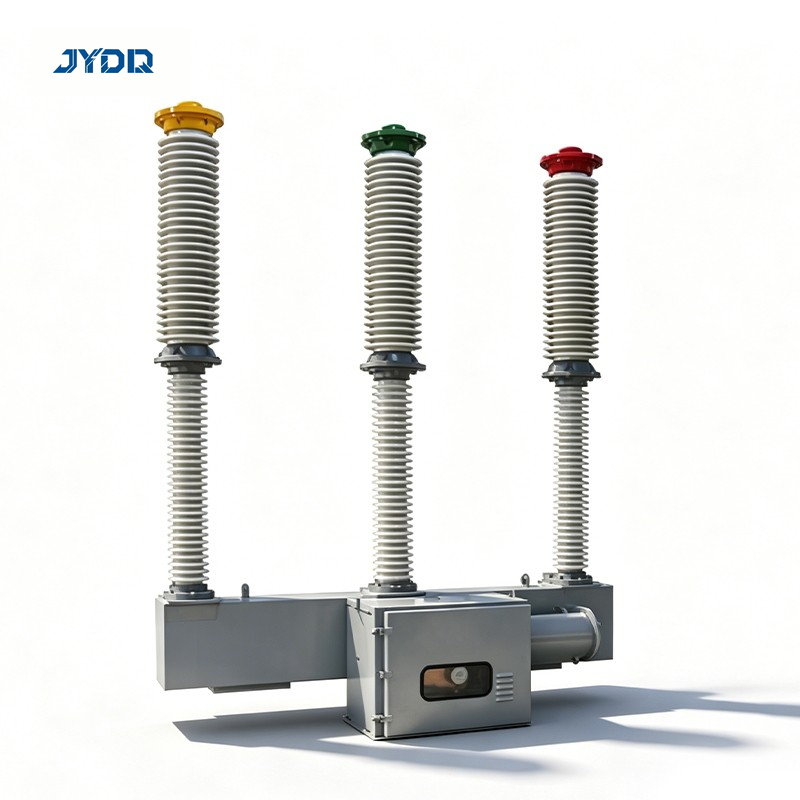
The 66kV and 72.5kV voltage levels occupy a unique space in electrical infrastructure. These ratings bridge the gap between lower distribution voltages and higher transmission voltages, making them ideal for regional distribution systems and primary substation configurations. Both ratings serve similar purposes but may vary by region and utility standards, with 66kV more common in North America and 72.5kV appearing frequently in Asian and European markets.
Distribution System Applications
Primary Distribution Role
The 66kV substation rating serves as a primary distribution point between high-voltage transmission networks and lower-voltage distribution circuits. In many electrical grids, these voltage levels connect directly to generation facilities or major transmission corridors, stepping down power through transformers to serve industrial parks, commercial zones, and residential areas. A sulfur hexafluoride circuit breaker at this voltage level must handle moderate to heavy current loads while maintaining reliable fault interruption capabilities.
The 72.5kV classification similarly functions as a distribution backbone in regions where this standard has been adopted. Substations operating at this voltage rating typically serve geographic areas of several hundred square kilometers, distributing power to multiple secondary substations and large industrial consumers. The performance requirements for sulfur hexafluoride circuit breakers at 72.5kV are comparable to 66kV equipment, though specific insulation and arc extinction designs may differ.
Load Switching and Control
At the 66kV level, sulfur hexafluoride circuit breakers perform critical load switching operations. These devices must reliably open and close circuits while carrying normal operating currents, which can range from hundreds to thousands of amperes depending on system configuration. The arc extinguishing properties of sulfur hexafluoride gas make it particularly effective at these voltage levels, providing fast deionization and superior dielectric recovery compared to oil-based or air-insulated alternatives.
Similarly, 72.5kV substations depend on sulfur hexafluoride circuit breakers for routine switching, maintenance operations, and emergency isolation. The reliability of these switching operations directly impacts system stability and customer service continuity across entire regions.
Industrial and Commercial Facility Integration
Large Industrial Consumer Connections
Major industrial facilities such as steel mills, petrochemical plants, mining operations, and manufacturing complexes often connect directly to 66kV or 72.5kV substation networks. These facilities require dedicated feeders with independent fault protection, necessitating specialized sulfur hexafluoride circuit breakers rated for medium-frequency switching cycles. The 66kV voltage rating provides an economical balance between power capacity and equipment costs for operations consuming 10 to 50 megawatts or more.
Large shopping centers, data centers, and industrial parks similarly depend on 72.5kV distribution infrastructure. The substation equipment must support frequent switching events, load transfers between redundant feeders, and emergency disconnect operations without degradation or maintenance interruptions.
Power Quality and System Stability
Sulfur hexafluoride circuit breakers at 66kV and 72.5kV voltage ratings contribute significantly to power quality and system stability. These devices must suppress transient overvoltages during fault clearing, preventing equipment damage downstream. The superior arc extinction capabilities of sulfur hexafluoride gas ensure that fault currents are interrupted within one to two cycles of alternating current, minimizing voltage dips and protecting sensitive industrial processes.
In critical substation configurations, redundancy requires multiple sulfur hexafluoride circuit breakers at the same voltage level. This architecture enables maintenance without service interruption and protects against single-point failures that could cascade across the distribution network.
Regional Voltage Standards and Grid Architecture
North American and Global Deployment
The 66kV standard dominates North American electrical grids, where it connects transmission systems to primary distribution networks. Most large utilities maintain extensive 66kV networks with hundreds of substations equipped with sulfur hexafluoride circuit breakers. This standardization simplifies equipment procurement, maintenance training, and spare parts inventory management across interconnected regions.
The 72.5kV rating appears more frequently in Asia, Australia, and parts of Europe, reflecting different standardization traditions. In these regions, sulfur hexafluoride circuit breaker designs are tailored to local voltage classes, insulation requirements, and system voltage profiles. The substation architecture often mimics the 66kV model, with 72.5kV serving as the regional distribution voltage equivalent.
Future Integration and Modernization
Both 66kV and 72.5kV substations increasingly accommodate renewable energy sources, electric vehicle charging infrastructure, and smart grid technologies. Modern sulfur hexafluoride circuit breakers at these voltage levels include advanced controls, digital monitoring, and predictive maintenance features. This evolution enables utilities to modernize aging equipment while maintaining compatibility with existing substation designs and control systems.
As electrical systems integrate distributed generation and storage solutions, the role of 66kV and 72.5kV sulfur hexafluoride circuit breakers becomes even more critical. These devices must manage bidirectional power flows, respond to rapid load changes, and maintain stability during transient events that microgrids and renewable energy sources create.
FAQ
What distinguishes 66kV sulfur hexafluoride circuit breakers from lower voltage alternatives?
At 66kV, the required insulation levels, fault current ratings, and mechanical design significantly exceed lower voltage equipment. Sulfur hexafluoride circuit breakers at this voltage level must interrupt currents exceeding 40,000 amperes and withstand transient overvoltages reaching 200 kilovolts. The gas pressure, tank dimensions, and operating mechanisms reflect these demanding requirements, making 66kV equipment more expensive and larger than distribution-class alternatives.
How do utilities choose between 66kV and 72.5kV substation configurations?
Selection depends primarily on regional standardization, existing infrastructure, and interconnection requirements with neighboring utilities. A utility in North America would standardize on 66kV to maintain compatibility with the regional transmission grid, while an Asian utility would adopt 72.5kV for the same reason. Retrofit projects often maintain the existing voltage class to minimize equipment replacement costs and training requirements, even when upgrading or replacing sulfur hexafluoride circuit breakers.
Why is sulfur hexafluoride chosen for 66kV and 72.5kV circuit breakers specifically?
Sulfur hexafluoride offers superior dielectric strength and arc extinction properties compared to air or oil alternatives. At these voltage levels, the combination of rapid arc deionization, minimal maintenance requirements, and long operational life justifies the additional cost of sulfur hexafluoride insulation. The gas enables compact sulfur hexafluoride circuit breakers with excellent reliability, making it the industry standard for substation equipment in this voltage class.

 EN