Choosing between indoor and outdoor sulfur hexafluoride circuit breakers is a critical infrastructure decision that directly impacts operational efficiency, maintenance costs, and system reliability. Both configurations offer distinct advantages depending on your facility type, environmental conditions, and electrical requirements. Understanding the fundamental differences between these two classes of equipment enables you to make informed deployment choices that align with your grid architecture and long-term business objectives.
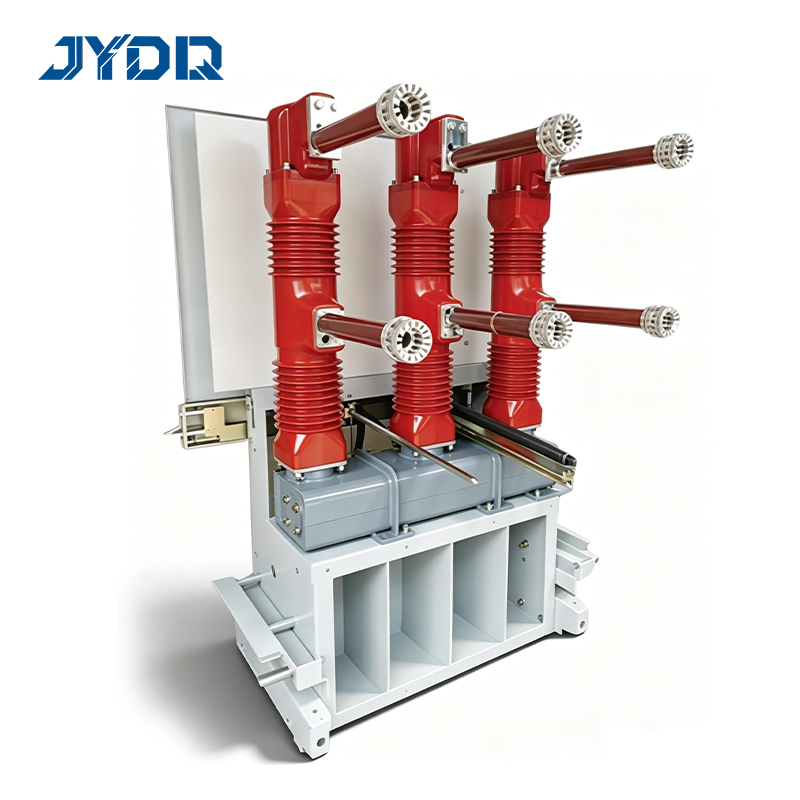
The distinction between indoor and outdoor breaker configurations extends beyond simple physical placement. Indoor breaker systems are engineered for controlled environments with stable temperature and humidity conditions, while outdoor breaker equipment must withstand extreme weather, UV exposure, and atmospheric contamination. Both types of sulfur hexafluoride circuit breakers deliver superior arc-quenching performance and isolation capability, but their operational context shapes design priorities, maintenance protocols, and total cost of ownership calculations.
Environmental Considerations and Installation Context
Indoor Breaker Deployment Advantages
Indoor breaker equipment thrives in substation buildings, power plants, and industrial facilities where environmental control is feasible. These installations benefit from climate-regulated spaces that minimize temperature cycling stress on high voltage insulators and mechanical components. The absence of direct weather exposure significantly extends equipment lifespan and reduces corrosion-related failures. Facility management teams appreciate indoor breaker systems because they simplify maintenance scheduling, enable year-round accessibility, and reduce emergency service complexity during adverse weather conditions.
The protection afforded by indoor environments allows high voltage circuit breakers to maintain consistent insulation properties and mechanical integrity throughout their operational life. Temperature-stable conditions preserve the insulating quality of sulfur hexafluoride gas, which is essential for maintaining dielectric strength and arc-extinguishing performance. Indoor breaker installations also reduce exposure to salt spray, industrial pollutants, and atmospheric moisture that can degrade external surfaces and internal contacts.
Outdoor Breaker Environmental Resilience
Outdoor breaker systems demand robust design features that address continuous environmental stress. These units must function reliably across temperature ranges from extreme cold to intense heat, resist UV radiation, withstand heavy precipitation, and maintain operational integrity during sandstorms or industrial dust conditions. Modern outdoor breaker technology incorporates specialized coatings, reinforced sealing systems, and corrosion-resistant materials that enable safe operation in harsh climates. The high voltage insulation and SF6 gas containment in outdoor breaker configurations receive additional engineering attention to ensure performance stability under extreme conditions.
Outdoor breaker installations serve essential grid functions in transmission corridors, distribution substations in remote locations, and industrial facilities where centralized indoor switching is impractical. These deployments demand higher maintenance frequency and more rigorous gas purity monitoring compared to indoor breaker systems, yet they provide critical flexibility for distributed electrical infrastructure. The thermal cycling and moisture ingress challenges faced by outdoor breaker equipment require proactive gas sampling protocols and seal integrity verification to maintain safe operating conditions.
Technical Performance and High Voltage Specifications
High Voltage Isolation and Switching Capability
Both indoor and outdoor breaker designs leverage sulfur hexafluoride gas as the primary insulating and arc-extinguishing medium, enabling superior performance at high voltage levels. Sulfur hexafluoride circuit breakers excel in rapid fault current interruption, creating a reliable barrier between electrical faults and the broader grid infrastructure. The high voltage performance of SF6 technology ensures that both indoor and outdoor configurations can safely isolate equipment during maintenance, respond to fault conditions within milliseconds, and restore system stability with minimal collateral damage.
High voltage circuit breakers must meet stringent international standards for interrupting capability, insulation coordination, and mechanical durability. Indoor breaker systems typically achieve higher contact wear life because environmental stability reduces mechanical stress on moving components. Outdoor breaker units compensate through design optimization that accounts for thermal expansion variations and repeated mechanical cycling caused by temperature fluctuations. The sulfur hexafluoride circuit breakers deployed in both indoor and outdoor configurations deliver identical interrupting ratings when properly maintained and gas quality parameters are within specification.
Maintenance Requirements and Operational Longevity
Indoor breaker maintenance follows standardized schedules based on operating hours and switching cycles rather than seasonal adjustments. Technicians access indoor breaker equipment safely year-round, reducing emergency service costs and enabling predictable maintenance budgeting. The stable internal environment means that indoor breaker gas analysis results show consistent baseline values, simplifying condition-based monitoring and early fault detection. Long-term capital planning for indoor breaker replacement becomes more predictable because equipment degradation follows established patterns without weather-related acceleration factors.
Outdoor breaker systems require increased maintenance frequency due to environmental stress accumulation and moisture ingress risks. Gas sampling intervals for outdoor breaker equipment are typically more aggressive to detect contamination early before it compromises high voltage insulation performance. The moisture and particulate ingestion challenge in outdoor breaker installations demands superior seal design and more frequent contact surface cleaning compared to indoor breaker systems. Despite higher maintenance intensity, modern outdoor breaker technology delivers reliable long-term service when operators follow rigorous condition monitoring and preventive maintenance protocols.
Selection Criteria and Facility Design Integration
Space Constraints and Cost Implications
Indoor breaker installations require dedicated substation buildings or switchgear rooms that add capital expense but provide significant operational benefits. Facility costs include construction, climate control systems, and access infrastructure, yet these investments support centralized electrical management and simplified cable routing. The high voltage cable connections in indoor breaker arrangements benefit from protected conduit pathways and controlled junction environments that reduce fault probability and improve system reliability. Building-integrated indoor breaker systems offer aesthetic advantages and integrate more seamlessly with urban infrastructure compared to large outdoor breaker structures.
Outdoor breaker installations eliminate building infrastructure costs but require robust foundation systems, extensive grounding networks, and weather-protected control enclosures. The distributed placement of outdoor breaker equipment may reduce high voltage cable distances in transmission systems, lowering total project cost for large geographic areas. Remote location deployment of outdoor breaker systems supports grid expansion into areas where centralized facilities prove economically unfeasible. Direct comparison of indoor breaker versus outdoor breaker economics requires detailed project analysis that considers site-specific conditions, grid architecture, and long-term operational expectations.
Integration with Grid Architecture and Future Scalability
Centralized indoor breaker substations enable consolidated control strategies and coordinated protection schemes that enhance overall system reliability. High voltage equipment grouped in controlled environments supports automation systems, remote monitoring capabilities, and integrated SCADA integration without environmental complications. Future capacity expansion in indoor breaker facilities typically involves straightforward switchgear modifications and cable additions within existing structures, minimizing disruption to ongoing operations. The compact footprint of well-designed indoor breaker installations supports urban utility operations and industrial plants with space limitations.
Distributed outdoor breaker deployments offer scalability advantages for transmission networks and regional distribution systems serving geographically dispersed load centers. Adding transmission corridors or new distribution branches frequently involves outdoor breaker installations that connect existing infrastructure without requiring centralized facility modifications. High voltage substations utilizing outdoor breaker technology demonstrate superior adaptability to unexpected grid growth scenarios because expanding equipment capacity requires localized modifications rather than facility redesign. Strategic placement of outdoor breaker systems enables network topology optimization that improves fault clearing performance and reduces power loss in the transmission corridor.
FAQ
What is the primary advantage of choosing an indoor breaker over an outdoor breaker installation?
The primary advantage of indoor breaker systems is environmental stability, which extends equipment life, reduces maintenance complexity, and enables consistent performance monitoring. Climate control eliminates temperature cycling stress on high voltage insulators, preserves sulfur hexafluoride gas insulation properties, and prevents corrosion-related degradation of mechanical components. Facility-based indoor breaker equipment supports year-round maintenance accessibility and simplified emergency response protocols compared to outdoor breaker alternatives.
When would an outdoor breaker deployment be more cost-effective than an indoor breaker configuration?
Outdoor breaker systems become more cost-effective for distributed transmission networks, remote substations, and geographic locations where centralized facilities prove impractical or economically unfeasible. Large-scale transmission projects spanning multiple miles frequently benefit from distributed outdoor breaker installations that reduce total cable length and support network topology optimization. Rural utility operations and industrial sites serving dispersed load centers often achieve lower total project cost through outdoor breaker deployment because infrastructure savings exceed the cost differential of enhanced environmental protection.
How does high voltage performance compare between indoor and outdoor sulfur hexafluoride circuit breakers?
Sulfur hexafluoride circuit breakers deliver identical interrupting capability and insulation strength whether installed indoors or outdoors, provided equipment is properly maintained and gas quality parameters remain within specification. Both indoor breaker and outdoor breaker configurations leverage SF6 gas properties for superior arc extinction and fault current limitation. High voltage performance differences stem from maintenance practices and environmental stress rather than fundamental design capabilities, making equipment condition monitoring essential for reliable long-term operation regardless of installation context.

 EN












